Enjoy your Journey
Is There Really a Heaven?
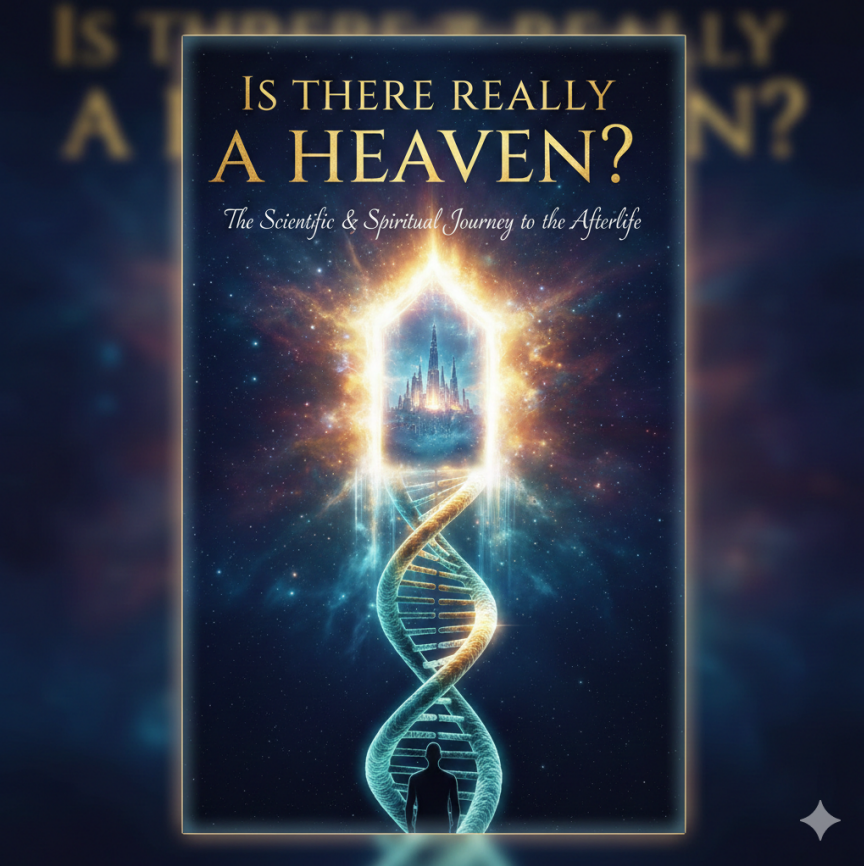
A unique Exploration into the question, "Is There Really a
Heaven?"
But First:
If
There is Really a Heaven then one has to understand,
The question of "Who Built
The Universe?".
This is
one of the oldest mysteries in human history.
The answer depends entirely on
whether you are looking through the lens of:
Science, Religion, or
Philosophy.
The
Scientific Perspective (The "How")
Modern science generally avoids the word "who" because it implies a conscious
builder.
Instead, it focuses on the physical processes that led to existence.
The Big
Bang Theory:
This is the prevailing scientific model. It suggests that about 13.8 billion
years ago, the universe began as an extremely hot, dense "singularity."
It
didn't explode into space; rather, space itself began expanding.
Fundamental Forces:
Science suggests that the universe was "built" by the interaction of four
fundamental forces: Gravity, Electromagnetism, and the Strong
and Weak Nuclear Forces.
Cosmic
Inflation:
In the first trillionth of a second, the universe underwent a massive growth
spurt called inflation, which smoothed out the distribution of matter and
energy.
Philosophical Perspectives (The "Why")
Philosophers often bridge the gap between science and religion by asking why
there is something rather than nothing.
The Prime
Mover:
Aristotle argued that there must be an "unmoved mover"—the first cause that set
everything else in motion.
Simulation
Theory:
A modern philosophical (and scientific) hypothesis suggests the universe might
be a highly advanced digital simulation built by a "Post-human" civilization.
Spontaneity:
Some physicists, like Stephen Hawking, argued that because there is a law such
as gravity, the universe can and will create itself from nothing.
Summary of
Views
Whether
the universe was built by a divine architect, a mathematical
inevitability,
or is simply a brute fact of existence remains the
ultimate open question.
Science explains the mechanics of the "building"
process, while faith and philosophy seek to identify the "builder."
"Is There Really A Heaven?
You can decide by reading on!
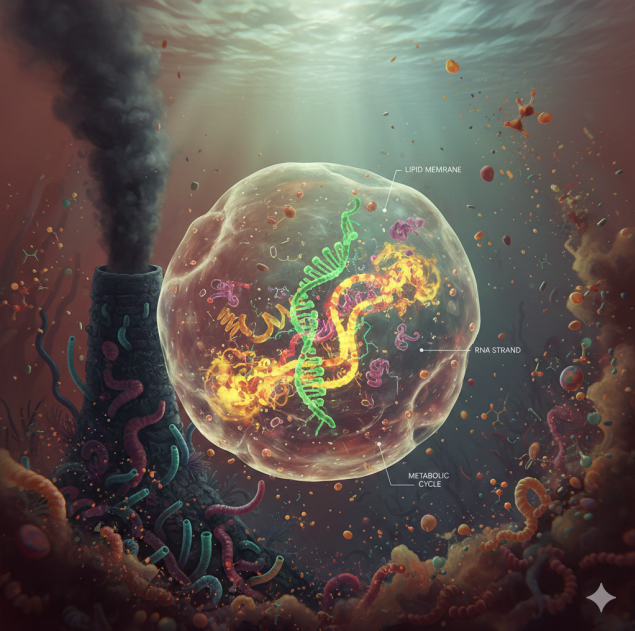
Below, one can see a depiction of the Origin of all Human Life, thus
"MEMORY"
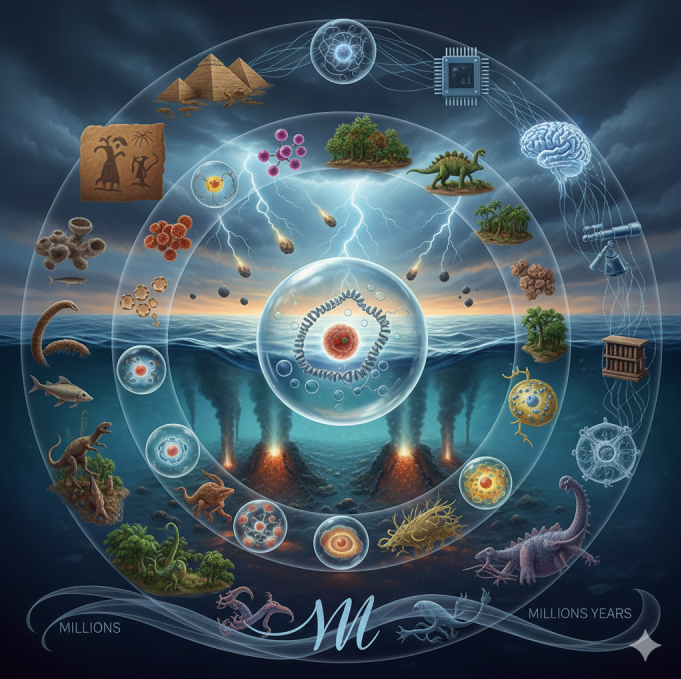
The Origin of all Human Life including MEMORY
The Original Genome
With Memory we have the ability to view the afterlife and
answer the question;
Is there Really a Heaven?
It all begins with your mind
and your memory!
Every person who has ever lived has eventually looked
at the stars, or looked into a mirror, and asked the same haunting question:
Is this it?
-
We spend our lives building a world of relationships,
collecting a vast library of memories, and nurturing a unique "self."
-
It seems a cruel joke of nature if all that complexity is meant to simply vanish
into the soil.
-
But what if we have been looking for the answer in the wrong
places?
-
What if the proof isn't in the clouds, but in our very chemistry?
In
"Is
There Really A Heaven?", we embark on a journey that bridges the gap between
the laboratory and the cathedral.
We begin with the microscopic the
Human Cell and its
DNA code
to show that you
were built with a level of intent that defies "accident."
We then move to the
Human Mind, exploring how
your Memories act as a
digital archive of your soul, designed to survive the hardware failure of the
body.
This book is not just a collection of hopes,
it is an
exploration into our Human Design.
It is an invitation to look at the "Great Migration"
not as an end, but as a transition to a destination we were always our DNA coded
to find.
The blueprint for your eternity is already written inside you.
Introduction:
The Evidence of A Design, The Blueprint of Forever
If you were to take a
single gram of your DNA, you could theoretically store every book ever written,
every movie ever filmed, and every song ever recorded with room to spare. We are
walking libraries of infinite information, encoded with a complexity that makes
our most advanced silicon microchips look like stone tools.
But this realization
demands a difficult question:
If the "code" of who we are is
this sophisticated, is it really possible that the book simply ends when the
physical cover is closed? Nature rarely builds something of immense value
only to discard it in an instant. In the world of computing, we understand that
the software is distinct from the hardware; if the laptop breaks, the data
survives in the cloud.
Why, then, do we assume
that when the biological "hardware" of the body fails, the vast, intricate
"software" of the soul is simply deleted?
This book is an
investigation into the possibility that our DNA is not just a biological
instruction manual, but a set of login credentials for a much larger network. By
looking at the intersections of molecular biology, quantum physics, and the
persistent "echoes" of the afterlife found in human experience, we will explore
the evidence that we are built for a destination that eyes cannot yet see.
We are not just products
of chemistry; we are the protagonists of a story written in an eternal script.
Welcome to the search for the Blueprint of Forever.
Setting the stage for the journey. If a house requires an
architect, does an eternal destination require a master plan?
We begin by looking at the "signatures" left in our reality.
An exploration of
the biological code.
We examine how the complexity of DNA suggests that life is
not a series of accidents, but a scripted masterpiece with information that
points toward a source.
Thematic Anchor: The Language
of the Divine
The greatest hurdle in
understanding our origin isn’t a lack of information; it’s a lack of
perspective. We often look at a human cell as a microscopic blob of jelly, but
under the lens of modern science, it reveals itself to be something far more
familiar: a city.
At the center of this city lies the nucleus, housing the DNA. To understand the
complexity of DNA, stop thinking of it as a "molecule" and start thinking of it
as a digital alphabet.
While our computers operate on a binary code of 1s and 0s, life operates on a
four-letter quaternary code (A, C, T, and G).
Consider these three
"layman’s benchmarks" for the complexity found within you:
-
The
Length of the Script: If you were to uncoil the
DNA from just one
of your trillions of cells, it would stretch nearly six feet long. If you
uncoiled all the DNA in your body, it would reach from Earth to Pluto and
back—multiple times.
-
The
Density of Information: The data required to
build you is so densely packed that all the information needed to recreate
the entire human race (8 billion people) could fit into a space no larger
than a single grain of rice.
-
The
Error-Correction System: DNA doesn’t just store
information; it proofreads it. It has "molecular machines" that travel along
the strands, cutting out errors and sewing in the correct code. This isn't
just chemistry; it's
editing.
The Archive of the Soul (The
Mind & Memory)
Where does a
thought go when it’s forgotten? This chapter distinguishes between the physical
brain and the non-material mind, arguing that our consciousness is a
"cloud-based" entity housed temporarily in a biological vessel.
The Great Migration (The
Physics of Transition)
Applying the
laws of thermodynamics and quantum mechanics to the moment of death. We look at
energy conservation—how energy cannot be destroyed, only transformed—and what
that means for the human spirit.
The Architecture of the
Destination (Defining Heaven)
Moving from "if"
to "where." This chapter explores the dimensions beyond our three-dimensional
sight, using string theory and ancient texts to define Heaven not as a cloud in
the sky, but as a tangible higher reality.
A transparent
dialogue addressing the most common hurdles: "Why can’t we see it?", "What about
suffering?", and "Is this just wishful thinking?" No stone is left unturned.
You can decide by reading on!
But first, more on "The Blueprint of Forever"
The question is as old as consciousness itself:
Is there really
a Heaven?
For some, the answer is
a matter of unwavering faith. For others, it is a wishful hope or a biological
impossibility. But to truly engage with this question, we must move beyond
simple "yes" or "no" answers and look at the extraordinary architecture of what
we actually are.
To fully understand the
possibility of a destination like a Heaven or Afterlife, we must first
understand the traveler. That is your Mind.
The Miracle of the Instruction Manual
It begins at a level so
small it is almost invisible, yet so complex it defies random chance. Every
human life starts with a single
Human Cell. Inside that
cell lies a masterwork of biological engineering:
DNA.
Think of DNA not just as
chemicals, but as coded instructions—a sophisticated software program that knows
how to build an eye, a heart, and a brain from scratch. If nature provides such
a meticulous "instruction manual" for our physical existence, is it possible
there is a coded purpose for our consciousness that extends beyond the physical
frame?
The Vessel of the Self: The Human Mind
The physical body is the
hardware, but the Human
Mind
is the light within the machine. Within this mind sits the most critical
component for any concept of an afterlife:
Memory.
Without memory, there
is no "self." If you were to enter a paradise without the memory of who you
loved, what you learned, or the life you lived, "you" wouldn't truly be there.
Memory is the thread that creates continuity. It is the bridge between who we
were yesterday and who we are today.
If the human mind is
capable of storing a lifetime of love, logic, and identity, we must ask: Is this
vast library of the soul meant to simply vanish when the biological "hardware"
fails? Or is the mind designed to
transcend—to carry
that data, that essence, into a different state of being?
The Choice to Read On!
This book does not ask
you to blindly believe, nor does it ask you to dismiss the miraculous. Instead,
it invites you to look at the evidence of your own existence.
By examining the
precision of our cells and the depth of our memories, we begin to see a pattern
that suggests we are more than just "biological accidents." We are complex
entities built with a sense of "forever" already inside us.
Not because the answer
is simple, but because the evidence is waiting. By the end of these pages, you
will be equipped to decide for yourself: Is the horizon we see the end of the
road, or merely the beginning of the view?
To expand on the
scientific details of the
Human Cell
and its
DNA code, we can look at the sheer technical brilliance
of how life is programmed.
This isn't just
organic material; it is a high-density information system that
rivals and in many ways exceeds the most advanced human
technology.
The Digital Nature of Life
At its core, DNA is a
quaternary
(base-4) digital code. While our computers use a binary
system of 0s and 1s, biological life uses four chemical
"letters":
A
(Adenine),
C
(Cytosine),
G
(Guanine), and
T (Thymine).
These aren't just
chemicals floating in a soup; they are precisely ordered
characters. When your body "reads" these letters, it does so in
groups of three called
codons.
Each codon acts like a word that translates into a specific
amino acid—the building blocks of proteins.
-
Redundancy and Error Correction:
Just like high-end software has "fail-safes," the DNA code
is redundant. Multiple different 3-letter combinations can
code for the same amino acid. This means that if a small
"typo" (a mutation) occurs, the system often continues to
function perfectly. It is a code designed to withstand the
chaos of the physical world.
The Staggering Information Density
The storage capacity
of the human cell is almost incomprehensible.
The Library of You:
A single human cell contains roughly
3
billion base pairs.
If you were to type out your
genetic code at a rate of 60 words per minute, 8 hours a
day,
It would take you about
50
years to finish the "book" of your life.
Physical Miniaturization:
If you took all the DNA from every cell in your body and
stretched it out, it would reach to the sun and back several
times.
Yet, this entire "instruction manual" is coiled so
tightly that it fits inside a nucleus only a few microns
wide.
The "Triplet of Triplets" Complexity
Recent science
suggests the code is even deeper than we once thought.
We used to think of
it as a simple linear sentence.
However, we now see
"higher-order" coding where a single 3 letter codon's meaning
can be influenced by the codons
before and
after it a "triplet of triplets."
You can decide by reading on!
A codon is a DNA or RNA sequence of three
nucleotides, A trinucleotide that forms a unit of genomic
information encoding a particular amino acid or signalling the termination of protein
synthesis, stop signals. This creates a
multi-layered complexity that allows a relatively small number
of genes, about 20,000 to create a nearly infinite variety of
biological outcomes.
The Transcendental Link
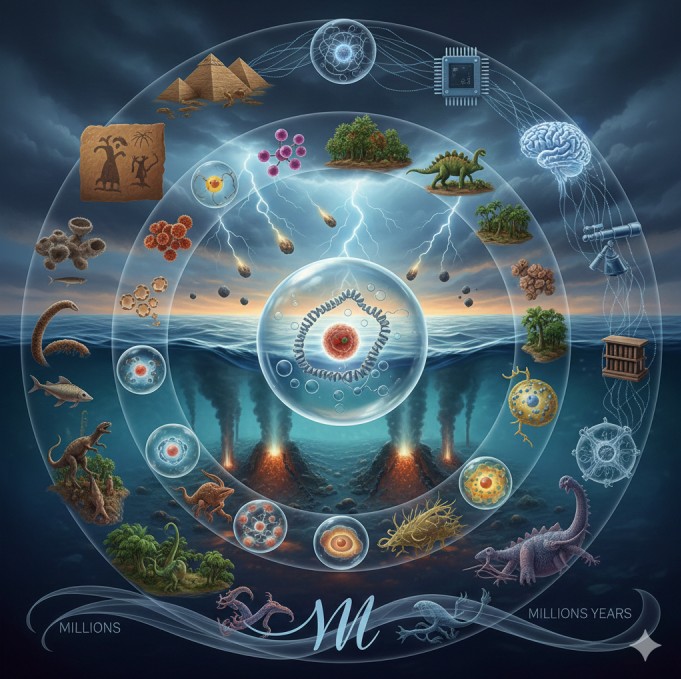
Why does this matter
for a book about Heaven?
If we were merely
random accidents, we would expect a "noisy," disorganized
structure.
Instead, we find a
highly optimized information system.
In the world of
technology, code never writes itself; it requires a coder.
In the world of
architecture, a blueprint requires an architect.
If our physical
bodies are built with such rigorous, intentional instructions,
it raises a profound possibility:
Perhaps the DNA code
is only the
First Volume.
If the code for a
single eye is a thousand pages long, how much more complex must
the code be for the
Mind
and the
Memory
that lives within it?
For over 300,000 years Humanity
has envisioned a higher Power
Across History Humanity Has
Asked the Same Question. "Is There Really A Heaven"
Chapter 2: The Archive of
the Soul
If the human cell is the
hardware and DNA is the operating system, then
Memory is
the data that makes the machine worth running.
Without memory, there is
no "You." You are the sum of the faces you recognize, the lessons
you’ve learned, and the love you’ve felt. To consider an afterlife—a
Heaven—we must first ask:
What becomes of the data when the computer crashes?
The Architecture of Remembrance
Science tells us that
memories aren’t stored in one single "folder" in the brain. Instead,
they are a complex web of synaptic connections. Every time you
experience something, neurons fire in a specific pattern, physically
altering the structure of your brain.
But here is the mystery:
Your brain cells
are constantly dying and being replaced. The physical atoms
that make up your brain today are not the same atoms that were there
ten years ago. Yet, your memories remain. The "data" survives even
when the "physical medium" changes. This suggests that memory is not
just a chemical byproduct; it is a persistent
identity
that flows through the physical matter like music through a speaker.
The Transcendental Hard Drive
For a person to
"transcend" to an afterlife, their memory must be portable. It must
be able to move from the biological brain to a non-biological state.
Think of your life as a
film being recorded. The camera (the body) might eventually break,
but the footage (the memory) is what matters. In recent scientific
studies of near-death experiences, patients have reported "life
reviews"—moments where their entire history of memory is accessed in
a flash, even when the brain has clinically flatlined.
-
The Continuity of Consciousness:
Researchers have found evidence that consciousness and memory
can persist for a short window after the heart stops beating.
This "lucid death" suggests that the mind is not merely a
flicker that vanishes the instant the power goes out, but a
flame that takes time to migrate.
Memory as the Bridge to Heaven
Why is this the key to
"reading on"? Because if memory can survive the initial failure of
the body, then the concept of a "Heaven" becomes more than just a
dream—it becomes a
destination for the data.
Heaven, in this sense,
is the place where the "Human Mind" finally uploads. It is the realm
where the constraints of a failing biological cell no longer limit
the vast library of the soul. If the DNA-coded instructions were the
"Intro," then your memories are the "Story." And every good story
needs an ending that isn't just a blank page.
The Preservation of "Self"
If you were to walk into
Heaven without your memories, you wouldn't be you. You would be a
blank slate. Therefore, for Heaven to exist, there
must be a
mechanism for memory to transcend the physical.
The fact that our minds
are capable of holding onto "forever" of longing for people long
gone and places we've never been, suggests that our memory isn't just
built for the next seventy years. It is built for
eternity.
A Biological, Philosophical, and Human Exploration of Memory,
Consciousness, and the Afterlife
What if
humanity’s oldest question—Is
there really a heaven?—is rooted not only in faith or
philosophy, but in biology itself?
Is There
Really a Heaven? explores the idea
that all human belief about the afterlife arises from the long
evolutionary history of the human brain, mind, and memory. The
journey begins not with religion, but with life’s first moment: the
creation of a single cell and the emergence of DNA—the original
memory system. Encoded within the genome is the record of survival,
adaptation, and continuity across billions of years.
As life
evolved, so did memory. From cellular instruction to neural
networks, from instinct to emotion, and from awareness to
self-reflection, the human brain became a living archive of the
past. Memory is not an abstract concept—it is the foundation of
identity, meaning, and imagination. Every thought, dream, and belief
is built upon what came before.
Drawing on
evolutionary biology, neuroscience, philosophy, ancient belief
systems, modern science, and near-death experiences, this book
examines how the human mind—shaped by memory and time—became capable
of asking questions about eternity. Heaven, in this view, is not
approached as dogma or doctrine, but as a human response to
continuity, loss, justice, hope, and remembrance.
Rather than
arguing for or against the existence of heaven,
Is There Really a Heaven?
invites readers to consider whether the idea of an afterlife may be
an extension of memory itself—biological, psychological, cultural,
and perhaps something beyond current understanding.
-
If there
is a future, it is because there was a past.
-
If there
is a present, it exists through memory.
-
And if
there is a heaven, it may be inseparable from the very
mechanisms that make us human.
The Great Migration
If Chapter 1 showed us
the
Code (DNA)
and Chapter 2 showed us the
Data
(Memory), then Chapter 3 must address the
Transmission.
How does the "Self" migrate from a biological body that is breaking
down to a realm that is eternal?
This is the "Great
Migration"—the moment the pilot leaves the aircraft.
The Physics of Departure
In science, we know that
energy cannot be destroyed; it can only be transformed. The human
mind operates on electrical impulses and complex energy fields. When
the "Human Cell" ceases to function, that energy doesn't simply
vanish into nothingness. It follows the laws of the universe and
moves elsewhere.
Think of the migration
like a
radio signal.
A radio set (the brain) can be smashed to pieces, but that does not
mean the broadcast (the mind) has stopped. The broadcast continues
to travel through the air, looking for a new way to be heard. The
Great Migration is the transition of your consciousness from being
"broadcast" through a physical body to being received by the
"Afterlife."
The "Life Review" and the Data Transfer
One of the most
compelling pieces of evidence for this migration is the
Life Review
phenomenon. Thousands of people who have died and been resuscitated
describe a "panoramic" view of their lives.
-
The Speed of Thought:
In these moments, time seems to disappear. A lifetime of decades
is reviewed in seconds.
-
The Emotional Weight:
People don't just see their memories; they
feel
them—and they feel how their actions affected others.
From a technical
standpoint, this looks like a "data dump." Just as a computer
prepares its files before a major system migration, the human mind
seems to "package" its essence during the transition. This is the
moment the "Human Mind" and its "Memory" are prepared to transcend.
The Bridge Between Dimensions
Is there "really a
heaven?" If the migration exists, then a destination must exist.
If we look at the
universe through the lens of quantum physics, we know there are
dimensions beyond the three we experience every day. The "Great
Migration" may simply be a shift in frequency. Just as a caterpillar
doesn't "die" but is transformed into a butterfly, the human
consciousness may be "coded" to shift from a 3D physical existence
into a higher-dimensional state.
Why You Must "Read On"
This migration is the
most important journey you will ever take. Understanding it changes
how you live today. If you are not just a "body," but a "traveler,"
then the choices you make, the love you store in your memory, and
the way you treat your "cellular suit" take on a much deeper
meaning.
But where is this signal
going? What does the "Receiver" look like?
This is not a book that tells you what to believe.
It is a book that shows how beliefs came to be,
Leaves the final decision to you.
You Can Decide! By Exploring the Existence of Heaven;
The After Life, From A Philosophical, Religious, and
Scientific Perspective.
The Architecture
of the Destination
If we accept the "Great
Migration"—the idea that the
Human Mind
and its Memory
are a signal being transmitted—we must eventually ask:
Where is the
signal being received? If a house is built with a door, it
implies there is a world outside. If a human being is built with a
"coded soul" and a capacity for "forever," it implies there is a
place designed to house that eternity. This is the realm we call
Heaven.
A Realm of Higher Complexity
To understand the
architecture of Heaven, we must look back at Chapter 1. If the
Human Cell
is a masterpiece of complexity in a physical world, then the
destination must be a masterpiece of a higher order.
In our current world, we
are limited by the decay of matter. DNA eventually breaks; cells
eventually die. But the architecture of Heaven is often described as
incorruptible.
-
Beyond the Three Dimensions:
Scientists suggest the universe has many more than three
dimensions. Heaven may be the "Parent Dimension" the place where
the laws of physics aren't based on gravity and decay, but on
light and
information.
-
The Speed of Thought:
In our physical "hardware," it takes time for a signal to travel
from our brain to our hand. In the architecture of the
afterlife, many believe the distance between
thought
and
reality vanishes.
The Recognition Chamber
The most vital part of
Heaven’s "design" is that it must be compatible with the
Memory we
carried across.
If you arrived in a place
that was purely abstract or alien, your human mind would have no
anchor. Therefore, the "architecture" of the afterlife is likely
designed to be recognizable. This is why so many who have glimpsed
the "other side" describe gardens, cities of light, or familiar
homes. It is a "User Interface" designed by the Creator to make the
transitioned mind feel at peace.
The Source of the Code
In Chapter 1, we asked
who the "Coder" of the DNA was. In the architecture of Heaven, we
meet the
Source.
If the cell is the
shadow, Heaven is the sun. The precision we see in our biology is a
"hint" of the perfection found in the destination. In this realm,
the "Human Mind" is no longer restricted by the "Human Cell." The
data (your memories) is finally plugged into a system with infinite
capacity. There is no more "forgetting." There is only "knowing."
The Final Decision: Is It Real?
We have followed the
journey from the microscopic
DNA code to the vastness of the
Human Mind,
through the
Great Migration, and finally to the
Architecture of
the Destination.
The evidence of your own
design—the fact that you are a walking, talking, remembering miracle
of information—suggests that you were not built for a dead end. You
were built for a
continuation.
The question "Is there
really a Heaven?" becomes easier to answer when you realize that you
are already carrying the blueprint for it inside your very cells.
You can
decide by reading on!
The Reader's
Choice
We began this journey
with a single, microscopic question:
Is
there really a Heaven?
To find the answer, we
didn't look at the clouds; we looked at the
Code. We
looked at the
Cell. We looked at the
Mind. We traced the path of a human being from a sequence of
DNA instructions to a vast library of memories, and finally to the
threshold of a "Great Migration."
Now, the journey brings
us to the most important destination of all:
Your
decision.
The Weight of the Evidence
Throughout these pages,
we have seen that you are not a cosmic accident. You are a
meticulously programmed entity.
-
The Cell
proved that you were built with intent.
-
The Mind
proved that you were built with a "Self" that transcends simple
chemistry.
-
Memory
proved that you were built to carry your identity forward.
If a bridge is built with
massive steel beams, it is meant to carry a heavy load. If a ship is
built with a deep hull, it is meant for the open ocean. And if a
human being is built with a mind that can contemplate eternity and a
code that defies random chance, then that human being is meant for
Forever.
The Two Horizons
You now stand between two
ways of seeing the world.
-
The Horizon of the Finite:
You can choose to believe that the DNA code is a beautiful
fluke, that memory is a temporary chemical flicker, and that the
"Great Migration" is an illusion of a dying brain. In this view,
the book ends when the hardware fails.
-
The Horizon of the Infinite:
You can choose to see the "Instruction Manual" within your cells
as evidence of a Designer. You can view your memories as the
"precious cargo" you were meant to keep. You can see Heaven not
as a fairy tale, but as the logical
Destination for a soul that was never meant to fit
entirely into a physical world.
Your Final Read
The evidence has been
laid out, but the "Read On" of your life is up to you. Belief is not
just a feeling; it is an acknowledgment of the design you carry
within your own body.
If there is a code,
there is a Coder. If there is a traveler, there is a Home.
Is there really a
Heaven? The cell says
yes through
its complexity. The mind says
yes through
its longing. The memory says
yes through
its persistence.
The blueprint is in your
hands. The migration is inevitable. The destination is waiting. The
choice to believe in the beauty of that destination is, and always
will be,
yours.
The Skeptic's Corner Questions and Answers
It is natural to have
questions. In fact, a belief that isn't tested is rarely a belief
that lasts. To truly decide "if there really is a Heaven," we must
confront the hardest objections from both the scientific lab and the
philosophical armchair.
Q1: "Isn't the 'Life
Review' or 'Light at the end of the tunnel' just the brain
hallucinating due to a lack of oxygen?"
The
Objection:
Skeptics argue that when the heart stops, the brain releases a flood
of D M T or endorphins, creating a "hallucination" of peace or
memories.
The
Response:
While the brain does undergo chemical changes during trauma, medical
science has documented cases where patients had
zero brain
activity (a flat E E G) yet returned with "veridical"
memories. This means they could describe things happening in the
room or even in different rooms while they were clinically dead. A
hallucinating brain is disorganized and confused; N D E (Near-Death
Experience) memories are described as "more real than real," highly
structured, and chronologically perfect. This suggests the
Mind is
functioning independently of the failing
Cell.
Q2: "If we are just
DNA and chemistry, doesn't the 'Self' die when the chemicals stop
reacting?"
The
Objection:
Biology says we are a "wet computer." When the battery dies, the
software vanishes.
The
Response:
This assumes the brain
produces
consciousness. But as we explored in Chapter 3, many physicists now
look at the brain as a
receiver
(like a radio or a TV). If you smash a TV, the "show" doesn't die;
it’s still being broadcast. The complexity of the
D N A coded
instructions is so high that it suggests the "User" (the
Soul) is separate from the "Hardware" (the Body). We aren't just
chemistry; we are the
meaning behind
the chemistry.
Q3: "If Heaven is a
real place, why can't we see it with telescopes or find its location
in space?"
The
Objection:
We’ve mapped the stars and haven't found a "pearly gate."
The
Response:
Heaven is likely not a location in
our
three-dimensional space, but a
state of being
or a higher dimension. Just as a 2D drawing on a piece of paper
cannot "see" the 3D person looking down at it, we cannot see a
higher dimension with tools built for this one. Heaven doesn't have
to be "up in the sky"; it can be "right here," separated only by a
shift in frequency or dimension.
Q4: "Why would a
'Coder' create such a complex life just to have it suffer and die?"
The
Objection:
If the DNA is so perfect, why does it break down? Why is there
cancer or aging?
The
Response:
This is the "broken hardware" argument. In any engineering process,
the prototype is tested in a harsh environment. This physical life
may be the "beta test" a place where we develop
Memory,
character, and love through struggle. If there were no stakes, the
"Data" we collect wouldn't have any value. The decay of the
Human Cell
is what makes the
Great Migration necessary. The "bugs" in the code here serve
to make us long for the "perfected code" of the Destination.
Q5: "Does everyone
go to the same Heaven, or does the 'Destination' change based on the
'Memory'?"
The
Objection:
If Heaven is a destination for the mind, what happens to minds that
are filled with darkness or hate?
The
Response:
If the afterlife is a "Data Transfer," then we carry what we have
recorded. This is the weight of the
Reader’s Choice.
If the architecture of Heaven is built on light and harmony, a mind
that has coded itself with the opposite may find the "Migration"
difficult. This is why the book emphasizes that we are "Read
ON" because the memories you create today are the luggage you carry
tomorrow.
Final Thought for
the Sceptic
Science and Spirit are not enemies; they are two
different languages describing the same miracle.
The Human
Cell
is a biological fact, but its
DNA-coded
instructions are a spiritual hint. You don't have to ignore
science to believe in Heaven you just have to follow the science to
its logical conclusion.
Still Interested you can
still decide by reading on!
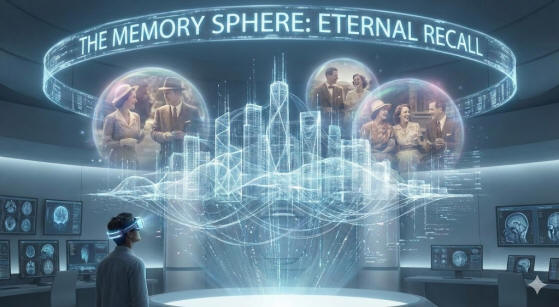
Memory is Inherited though generations.
Take the Monarch Butterfly, Memory in the DNA code
for millions of years.
In
order for there to be a heaven, the place must be a memory in our
Consciousness
This is not theology. This is the metaphysics of
consciousness.
If you’ve ever wondered whether reality itself is
a living expression of the mind,
Metaphysics of Consciousness teaching may change
how you see the universe and yourself.
Who is Basilides, you asked?
Basilides (Greek:
Βασιλείδης) was an
early Christian Gnostic religious teacher in
Alexandria, Egypt[1]
who, according to
Clement of Alexandria, was active between 117–161 AD,
and claimed to have inherited his teachings from the apostle
Saint Matthias.[3][4]
He was a pupil of either the
Simonian teacher
Menander,[5]
or a disciple of
Peter called Glaucias.[6]
-
Why Basilides believed God is beyond being,
beyond name, beyond image
-
How creation unfolds from pure consciousness into
structured reality
-
Why matter itself may be a condensed form of
awareness
-
How this ancient vision parallels modern ideas in
panpsychism, quantum theory, and non-dual philosophy
-
Why these teachings were considered too dangerous
— and later suppressed
Source:
https://en.wikipedia.org/wiki/Basilides
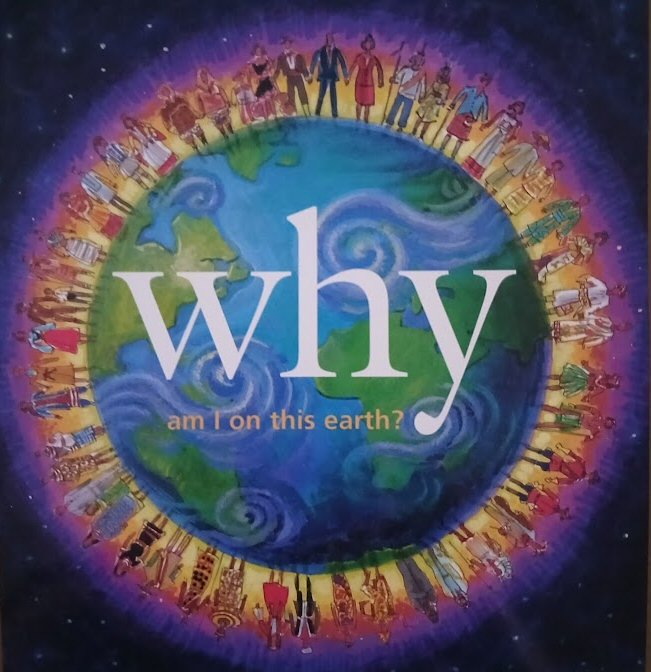
Question?
Then
What Came Before Memories?
Believe it or not.
"The
real unexplained question, is how humans have memory at all."
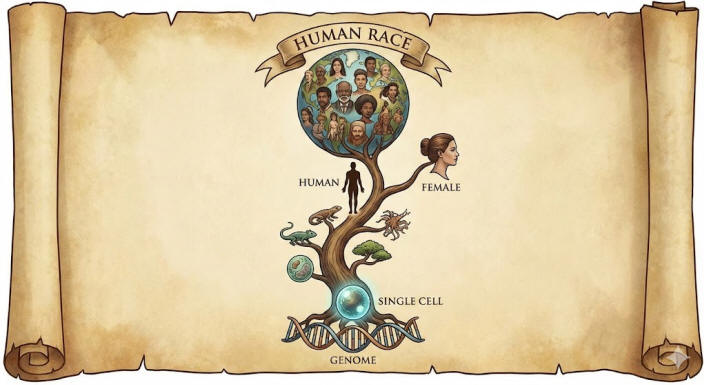
"The
Humanoid Human Race, evolved from a single "Cell" some 300,000 years ago"
Enter
into the timeless question of what happens after we die.
Explore why humanity has always searched for meaning, comfort,
Understanding beyond the physical world.
"It
will be a memory, a combination or a new type of memory you will
hopefully access, after death!"
'To understand heaven, the afterlife, and consciousness beyond
death, we must first understand human memory."
A.
Explanation of the Topic
The following is
study that explores the afterlife and the concept of heaven. For
thousands of years, human beings have asked:
B.
Purpose of the Study: "Is There Really A Heaven"
This research
document provides a broad, fair overview of beliefs and ideas about
heaven and life after death, offering insights from philosophy,
religion, science, history, and personal experience.
Open AI
reports:
-
How it forms,
how it works, and how it appears in dreams.
-
Memory is the
foundation of ones identity.
-
Without memory,
a person cannot say “I am myself,” and certainly could not
continue into an afterlife with self awareness.
The following
Chapter explains:
-
Memory systems,
types of dreams, and how the two interact.
-
Laying the
scientific groundwork for later chapters on the soul,
consciousness, and eternal life.
-
"N D E " Near
Death Experiences and often deep dreams experienced by humans,
visualized their memories as if they were floating above ones
body.
The Many Forms of Human Memory
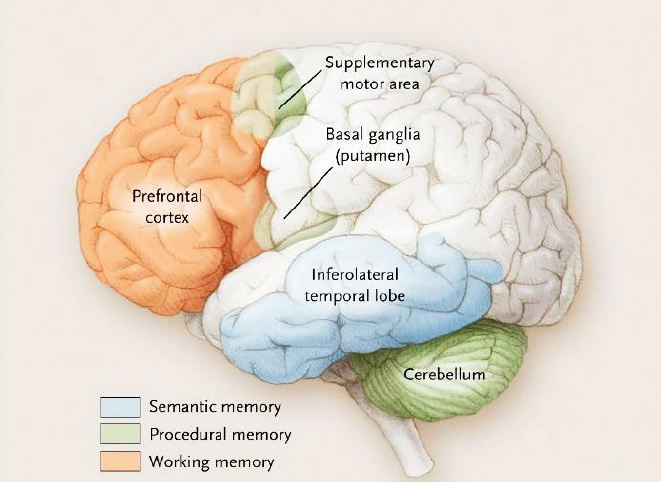
"Now
we can start with the types of memory."
Before we can seriously ask whether;
consciousness, identity, or even memory itself might survive
bodily death,
we must first understand what memory truly is.
Modern science has shown us that memory is not
a single storage box inside the brain. Rather, it is a vast, layered
system distributed across neural circuits, shaped by emotion,
reinforced by the body, and continuously rewritten by experience.
What follows is a clear, structured overview of
the major types of memory recognized by neuroscience, psychology,
and embodied cognition.
Together, they form the foundation upon which
identity, learning, personality, and lived experience are built.
1. Sensory Memory: The Gateway of Experience
Sensory memory is the briefest form of memory,
lasting only fractions of a second to a few seconds. It captures raw
sensory information exactly as it is received, allowing the brain to
decide what deserves further attention.
- Iconic Memory
– Visual impressions (images, shapes, colors)
- Echoic Memory
– Auditory input (sounds, speech, tone)
- Haptic Memory
– Touch and physical sensation
- Olfactory Memory
– Smell, often strongly tied to emotion
- Gustatory Memory
– Taste
Although fleeting, sensory memory is essential.
Without it, perception itself would feel disjointed and chaotic.
2. Short-Term Memory: Temporary Holding Space
Short-term memory retains information for seconds
to roughly half a minute. It allows us to hold a small amount of
information—typically five to nine items—just long enough to use it.
Examples include remembering a phone number before
dialling or holding the beginning of a sentence in mind while
listening to the end.
3. Working Memory: The Mind at Work
Working memory expands upon short-term memory by
actively manipulating information. It is the brain’s mental
workspace and plays a critical role in reasoning, comprehension, and
decision-making.
Key components include:
- Central Executive
– Directs attention and prioritizes tasks
- Phonological Loop
– Handles spoken and written language
- Visuospatial Sketchpad
– Manages visual and spatial information
- Episodic Buffer
– Integrates information from multiple sources
Working memory is essential for problem-solving,
conversation, reading, and planning.
Long-Term Memory: The Architecture of the Self
Long-term memory stores information for days,
years, or a lifetime. It is traditionally divided into explicit
(conscious) and implicit (unconscious) systems.
4. Explicit (Declarative) Memory: What We Can Recall
Explicit memory consists of memories we can
consciously access and describe.
Episodic Memory
Episodic memory stores personal experiences events
that happened to us, embedded in time, place, and emotion. These
memories form the backbone of our life story.
Semantic Memory
Semantic memory contains facts, meanings,
concepts, and general knowledge. It allows us to understand
language, recognize objects, and navigate the shared world of ideas.
Together, episodic and semantic memory shape our
sense of identity and continuity over time.
5. Implicit (Non-Declarative) Memory: What We Know Without
Knowing
Implicit memory operates below conscious awareness
and is expressed through performance rather than recollection.
- Procedural Memory
– Skills and habits such as walking, writing, or driving
- Priming
– Prior exposure influencing later responses
- Conditioned Memory
– Learned associations formed through experience
These memories often remain intact even when
explicit memory fades.
Memory Beyond the Brain Alone
Modern research increasingly recognizes that
memory is not purely cognitive. It is emotional, physical, and
deeply embodied.
6. Emotional Memory
Emotional memory is shaped by the amygdala and
strengthens memories associated with strong feelings such as fear,
love, joy, or grief. Emotion does not merely accompany memory—it
enhances and prioritizes it.
7. Trauma Memory
Traumatic memories are often fragmented and
sensory-based rather than narrative. They may surface as bodily
sensations, images, or emotional reactions rather than clear verbal
recall.
8. Muscle Memory
Often misunderstood, muscle memory refers to motor
patterns encoded in neural pathways. Repetition strengthens these
pathways, allowing complex actions to become automatic.
9. Somatic (Body) Memory
Somatic memory refers to memories held in bodily
responses—posture, tension, pain, and instinctive reactions. Many
therapeutic approaches acknowledge that the body remembers even when
the mind does not.
10. Autonomic Memory
This form of memory governs learned physiological
responses such as heart rate changes, stress reactions, and
reflexive behaviors.
Higher-Order and Integrative Memory Systems
11. Autobiographical Memory
Autobiographical memory blends episodic and
semantic memory into a coherent life narrative. It answers the
question,
“Who am I?”
12. Prospective Memory
Prospective memory allows us to remember future
intentions—appointments, tasks, and plans.
13. Spatial and Temporal Memory
- Spatial Memory
enables navigation and awareness of environment
- Temporal Memory
allows us to order events and understand sequence
Both are critical to making sense of lived
experience.
14. Social and Collective Memory
Humans also carry memory socially. Faces,
relationships, family stories, cultural traditions, and shared
histories all contribute to identity beyond the individual.
Sleep, Dreams, and Memory Integration
15. Dream Memory
Dreams recombine fragments of memory, emotion, and
imagination. They appear to support emotional regulation and
creative integration.
16. Sleep-Dependent Memory Consolidation
- REM sleep
strengthens emotional and procedural memory
- Non-REM sleep
consolidates factual and declarative memory
Sleep is not rest alone—it is memory maintenance.
Closing Reflection
Memory is not a single function confined to a
single location. It is layered, embodied, emotional, and adaptive.
It lives in neural networks, emotional responses, bodily patterns,
and shared stories. Understanding memory in this broader sense opens
the door to deeper questions, about identity, continuity, and
whether the essence of who we are may extend beyond the physical
brain itself.
This understanding becomes a necessary foundation
as we move forward into questions of consciousness, near-death
experiences, and the possibility of life beyond bodily death.
Further Discussion of Types Memories
"For humans to have memory, and enter a Heaven or
an afterlife,"
"We would need to understand the types of memory."
"The memory we currently access in our dreams."
How Dreams and Memory Connect and Why It Matters
Dreams and memory are not random side-effects of sleep.
They are deeply intertwined processes that reveal
how the mind preserves identity, meaning.
Continuity of three things any idea of “heaven”
depends on.
Dreams offer a
unique window into the relationship between memory and
consciousness. While asleep, the body rests and external awareness
fades, yet the mind remains active, sometimes vividly so. In this
altered state, memories are not merely replayed; they are
reorganized, blended, and emotionally reassessed. This nightly
process reveals something essential about the human mind: memory and
identity are not strictly tied to our waking physical state.
Modern
neuroscience shows that during sleep, especially during rapid eye
movement (REM) sleep, the brain strengthens emotional memories,
integrates recent experiences with long-term recollections, and
constructs narratives that often feel more meaningful than logical.
Dreams regularly combine fragments of the past, present concerns,
and imagined futures into a single, seamless experience. Time
dissolves. People long gone reappear. Events that never occurred
feel authentic.
This matters
because dreams demonstrate that consciousness can persist even when
the physical body is largely offline. In dreams, we see, feel,
choose, fear, love, and recognize others, without relying on sensory
input from the external world. If conscious experience can exist in
this way every night, it raises an important philosophical question:
must consciousness and memory truly end when bodily life does?
Another striking
feature of dreams is the durability of emotional memory. While
factual details often fade, emotionally charged experiences remain
vivid. Love, grief, fear, hope, and connection are the most
persistent elements in dreams. People frequently dream of deceased
loved ones not as distant memories, but as present, recognizable,
and emotionally intact individuals. If any aspect of human
experience were to endure beyond physical death, emotional memory
and relational identity would be strong candidates.
Dreams also free
memory from linear time. The past does not stay behind us, nor does
the future remain abstract. In dreams, all moments coexist. This
timeless quality closely mirrors how many religious and
philosophical traditions describe the afterlife—not as a
continuation of earthly time, but as a state beyond it.
Dreams do not
prove the existence of heaven. Science does not make that claim, and
neither does this book. What dreams do provide, however, is
plausibility. They challenge the assumption that consciousness and
memory are entirely dependent on the physical body. They show that
identity can persist without physical surroundings, and that
awareness can continue in altered states we experience regularly and
naturally.
If memory
survives the loss of waking consciousness every night, and if the
mind can generate coherent experience without bodily awareness, then
the idea of continued existence after death is not irrational. It
may be unknown—but it is not unimaginable.
A Reflective
Thought
If the human mind can create entire worlds while the body sleeps,
if memory can survive nightly unconsciousness,
and if love and recognition return to us in dreams without
invitation,
then the possibility of some form of continued existence after death
is not unreasonable.
For many, that possibility is enough to hope.
For others, it is enough to believe.
Philosophical Perspectives
An exploration of
major thinkers ancient to modern,
Who have wrestled
with the existence of heaven, consciousness, the soul, morality.
Question?
What it means to live and die well.
Philosophical
Perspectives
Throughout human
history, thinkers have returned again and again to the same
unavoidable question:
What happens when we die?
Long before modern science, brain imaging, or near-death studies,
philosophers used reason, observation, and introspection to explore
the nature of the soul, consciousness, and the possibility of an
afterlife. Their conclusions differ widely, but together they form a
rich intellectual foundation for the question at the heart of this
book:
Is there really a heaven?
The ancient Greek
philosopher
Plato believed that
the soul is immortal and only temporarily resides in the body. To
Plato, death was not an ending but a release—a return of the soul to
a higher realm of perfect forms and eternal truth. In this sense,
Plato’s philosophy aligns closely with the traditional idea of
heaven as a real and enduring destination beyond physical life.
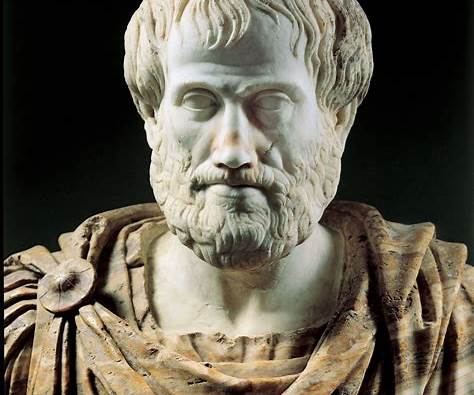
Plato’s student,
Aristotle, took a
more practical and biological approach. He viewed the soul as
inseparable from the body, much like the function of sight is
inseparable from the eye. This perspective made personal survival
after death uncertain. Rather than promising a clear heaven,
Aristotle emphasized purpose and fulfillment within a well-lived
earthly life.
During the
medieval period, philosophy and theology became deeply intertwined.
St. Augustine
drew heavily on Platonic ideas, describing heaven as eternal
communion with God and the ultimate fulfillment of the soul’s
longing. Thomas Aquinas
later argued that faith and reason are not enemies but partners. He
maintained that the soul survives death and that heaven represents
the completion of human purpose, a state of perfect understanding
and union with the divine.
The
Enlightenment
brought doubt and restraint.
Immanuel Kant
argued that human reason alone cannot prove the existence of heaven
or the immortality of the soul. Yet he believed that the idea of an
afterlife serves a vital moral function. Heaven, in Kant’s view, is
not a place we can measure or observe, but a necessary concept that
gives meaning to justice, responsibility, and ethical living.
Modern
philosophy often turns away from heaven altogether.
Friedrich Nietzsche
rejected the idea of an afterlife, arguing that belief in heaven
diminishes the value of life on earth.
Jean-Paul Sartre
went further, claiming there is no predetermined meaning, no soul
waiting beyond death, only the meaning we create through our choices
while alive. Albert Camus
accepted the mystery without attempting to resolve it. He suggested
that life’s value comes not from answers about the afterlife, but
from how we live while facing uncertainty.
What emerges
from these philosophical perspectives is not a single answer, but a
pattern. Even when philosophers deny heaven as a literal place, they
continue to search for continuity, of meaning, of moral
responsibility, of consciousness, of memory. Heaven shifts from
being a destination after life to a guiding idea within life itself.
Philosophy may
not prove that heaven exists, but it performs something equally
important. It invites us to think deeply, to question honestly, and
to choose what we believe. In the end, the question is not only
whether heaven is real, but how our belief, or disbelief, shapes the
way we live, love, and remember.
That question remains open.
Ancient Beliefs
A journey through early civilizations Egyptian,
Greek, Norse, Chinese, and others,
How their mythologies, rituals, and cosmologies laid the groundwork
for today’s ideas of heaven and the afterlife.
"Throughout history,
Philosophers
have wrestled with the great mystery of what happens after death."
"Their ideas help shape modern thinking about the soul,
consciousness, morality."
"Whether or not heaven is a real destination or a symbolic ideal."
Below
is an exploration of major philosophical viewpoints, with links to
sources and further reading.
A. Plato’s
Perspective
Plato believed the soul
is immortal, existing before birth and surviving after the body’s
death. In his famous allegory of the cave, he suggested that earthly
life is only a shadow of a higher spiritual reality, what many might
interpret as heaven. “The soul, when using the body as an instrument
of perception, is confused. But when it contemplates by itself, it
passes into the realm of the eternal.” Plato, Phaedo. Plato
saw the afterlife as a realm of perfect truth and beauty, where the
soul returns after shedding its earthly limitations.
Source Links
B. Aristotle’s
Perspective:
Aristotle differed from Plato, teaching that the soul
is the form of the body, the essence that gives life. Yet Aristotle
believed one part of the soul may be eternal: the active intellect,
capable of surviving physical death. His writings inspired centuries
of Christian and Islamic thought about heaven, especially in the
works of St. Thomas Aquinas and medieval scholars.
Source Links:
Stanford Encyclopaedia – Aristotle’s Metaphysics:
https://plato.stanford.edu/entries/aristotle-metaphysics/
C. Naturalistic
Perspective:
Modern naturalists argue that there is no scientific
evidence for heaven or the soul. Consciousness, they say, is a
product of brain activity, and ends when the brain stops
functioning. Daniel Dennett, a leading philosopher of mind, suggests
that the soul is a "user illusion" created by the brain. “There is
no single, unified ‘self’ inside the brain. What we are is a
collection of processes.” Dennett, Consciousness Explained
Source Links:
Overview of Naturalism:
https://plato.stanford.edu/entries/naturalism/
D.
Eastern Philosophical Perspectives
-
Eastern traditions
offer a rich philosophical foundation for understanding the
afterlife:
-
Hindu philosophy
teaches reincarnation and liberation (moksha).
-
Buddhist philosophy
focuses on consciousness continuing in a new form until
enlightenment.
-
Taoist philosophy
views death as part of a natural cosmic cycle.
These perspectives
emphasize personal transformation, karma, and the impermanence of
the self.
Source Links:
E. Modern
Philosophical Thought:
Contemporary philosophers explore consciousness,
identity, and near-death experiences in new ways:
1. John Hick
Universalism & Soul-Making: Hick proposed
that the afterlife allows continued spiritual growth, what he called
“soul-making” until every soul reaches God.
2. Thomas Nagel
Mystery of Consciousness: Nagel famously
wrote that consciousness cannot be fully explained by physical
processes alone.
3. Derek Parfit
Identity and Survival: Parfit suggested
that survival after death might not require a soul, what matters is
psychological continuity.
Source Links
F. Summary of
Philosophical Perspectives: Philosophers
do not agree on the existence of heaven, but their insights offer a
framework for reflection:
-
Plato: the soul
returns to a higher realm.
-
Aristotle: The
intellect may survive death.
-
Naturalists:
consciousness ends with the brain.
-
Eastern traditions:
spiritual evolution continues across lifetimes.
-
Modern thinkers:
consciousness and identity remain profound mysteries.
These views help shape
global beliefs about the afterlife and offer meaningful tools for
personal exploration.
Ancient
beliefs and cultures around the world, hold rich and diverse beliefs
about the afterlife.
-
These beliefs shaped early religion,
-
Social values, burial practices, and humanity’s understanding of
life beyond death.
The Egyptians held one of the most elaborate views of
the afterlife. They believed in the Field of Reeds, a perfected
version of earthly life. The soul underwent judgment by Osiris, who
weighed the heart against the feather of Ma’at (truth). If found
worthy, the soul lived eternally in peace.
Source Link:
British Museum – Ancient Egyptian Afterlife
https://www.britishmuseum.org/collection/galleries/ancient-egypt
The Greeks believed in Hades, a vast underworld where
souls journeyed after death. The righteous were sent to the Isles of
the Blessed, while heroes might enter Elysium, a heavenly paradise
of joy. Those who lived wickedly were punished in Tartarus.
Source Link: Perseus
Digital Library – Greek Underworld [ Several links
https://www.perseus.tufts.edu/hopper/searchresults?q=Greek+Underworl
The Norse mythology described several afterlife
realms. The most famous is Valhalla, where warriors chosen by
Valkyries feasted and prepared for Ragnarok. Others went to
Fólkvangr, ruled by the goddess Freyja. Souls who died of illness or
old age might enter Hel, which was not a place of torment, but a
cold and quiet realm.
Source Link: World
History Encyclopedia – Norse Afterlife:
https://www.worldhistory.org/article/1150/the-norse-afterlife/
Traditional
Chinese beliefs described the afterlife as governed by
Yanluo Wang, the King of the Dead, who judged each soul. The
afterlife contained different courts, rewards, and
punishments. Ancestor worship played a major role, families
believed the dead continued to influence the living.
Source Link: Asia
Society – Chinese Afterlife Beliefs:
https://asiasociety.org/education/chinese-beliefs-afterlife
The
Mesoamerican civilizations, including the Maya and Aztecs,
believed in complex afterlife realms. The Aztecs described
Mictlan, a multi-layered underworld journeyed by most souls.
Warriors and women who died in childbirth entered heavenly
realms instead. The Maya envisioned a similar world called
Xibalba, ruled by death gods.
Source Link:
Smithsonian – Mesoamerican Afterlife:
https://www.smithsonianmag.com/history/ancient-maya-underworld-180974082/
Modern Interpretations
Modern interpretations of heaven and the afterlife.
The
influence of science, and the changing philosophical ideas of the
modern age.
These
perspectives demonstrate how contemporary people understand the
mystery of what lies beyond death.
Examining how contemporary religions, spiritual
movements,
and cultural ideas reinterpret heaven in today’s world.
Christianity. Past
2,000+ years:
Christian theology describes heaven as the
eternal presence of God, a state of perfect peace, joy, and restored
relationship with the Creator. Many denominations teach:
-
Eternal life
through Jesus Christ
-
A resurrection of
the dead
-
A new heaven and a
new earth (Revelation 21)
Christian
interpretations range from literal to symbolic. Some visualize a
physical paradise, while others understand heaven as a spiritual
relationship with God.
Source Links:
https://Christianity.com
– What Is Heaven?:
https://www.christianity.com/wiki/heaven-and-hell/what-is-heaven.html
Bible Gateway – Heaven
Verses:
https://www.biblegateway.com/quicksearch/?quicksearch=heaven&qs_version=NIV
Islam:
Islam describes Jannah as a paradise of peace,
beauty, and fulfillment. The Qur’an provides vivid imagery of
flowing rivers, gardens, and divine reward for righteous believers.
Islam emphasizes:
Source Links:
Quran.com – Verses on Jannah:
https://quran.com/search?q=Jannah
About Islam – Islamic
Afterlife:
https://aboutislam.net/reading-islam/understanding-islam/islamic-beliefs-afterlife/
C. Judaism
Judaism holds diverse
views on the afterlife. While the Hebrew Bible focuses more on life
here and now, later writings describe:
Olam Ha-Ba
(The World to Come)
-
Resurrection taught
by later prophets (Daniel 12:2)
-
The soul's
closeness to God after death
-
Rabbinic teachings
emphasize righteous living, justice, and spiritual growth.
Source Links
My Jewish Learning –
The World to Come:
https://www.myjewishlearning.com/article/the-world-to-come/
Jewish Virtual
Library Afterlife:
https://www.jewishvirtuallibrary.org/afterlife-in-judaism
D. Secular Views
-
Many modern secular
thinkers interpret heaven symbolically rather than literally.
Common ideas include:
-
Heaven as a
metaphor for peace or fulfillment
-
Immortality through
one’s legacy, influence, and memory
-
The afterlife as a
psychological construct to cope with mortality
-
Secular humanists
emphasize living ethically in the present, finding meaning
through relationships and positive impact.
Source Links:
-
Humanist UK –
Humanist Views on Death:
https://humanists.uk
Search for Humanist view of Death
-
Psychology Today
– Why People Believe in Heaven:
https://www.psychologytoday.com/us/blog/mind-myths/202202/why-do-people-believe-in-heaven
E. Eastern &
Interfaith Modern Interpretations:
Hinduism:
Modern Hindu belief blends reincarnation with the
possibility of temporary heavenly realms between lives.
Source:
https://www.britannica.com/topic/Hinduism
Buddhism:
Buddhists may acknowledge heavenly realms, but
enlightenment, not heaven—is the ultimate goal.
Source:
https://www.britannica.com/topic/Buddhism
New Age &
Contemporary Spirituality: These
movements often describe heaven as:
-
A higher vibration
or energetic plane
-
A return to
universal consciousness
-
A spiritual
dimension accessible through meditation or mystical experience
Source Links:
https://www.learnreligions.com/
*Search "Afterlife"
F. Comparative
Summary
-
Modern
interpretations show how humanity continues to seek meaning:
-
Religious
traditions offer hope, justice, and divine promise.
-
Secular views
emphasize personal meaning and legacy.
-
Eastern
philosophies highlight spiritual growth and liberation.
-
New Age thought
blends science, mysticism, and psychology.
Together, they create a
mosaic of beliefs about what may await beyond this life.
Scientific Perspectives
A look now at: Neuroscience, Physics, Cosmology, and Consciousness
studies say about life after death..
-
Science
approaches the idea of heaven from the standpoint of observable
evidence, measurable data, and the study of consciousness.
-
While science
does not affirm the existence of heaven, many respected
scientists have offered thoughtful statements about death,
consciousness, and the possibility of life beyond the physical.
Following are expanded discussions and statements from three of the
world’s most influential scientific voices.
A. Sceptical Views:
Many scientists maintain that heaven
cannot be studied scientifically because it lies outside the
natural, observable world. From this viewpoint, the afterlife is a
matter of faith rather than empirical knowledge.
Science observes that
when the brain ceases functioning, consciousness appears to cease as
well. However, some areas of research. especially near-death
experiences, continue to spark debate.
B. Brain Death and
Consciousness:
Neuroscience links consciousness to brain
activity. When the brain shuts down, measurable awareness
disappears. Yet, modern resuscitation cases have challenged earlier
assumptions, as some patients report vivid experiences during
cardiac arrest.
This leads to important
scientific questions:
-
Can consciousness
exist independently of the brain?
-
Are N D E's
hallucinations or evidence of something more?
-
Why do so many N D
E's share common elements across cultures?
C. Cosmology:
Modern cosmology does not point to a physical heaven
within observable space. However, the discovery of multiple
dimensions, dark matter, dark energy, and the theory of multiverses
leave open the possibility of realities beyond our current
understanding.
Statements by Three
Top Scientists: Below are contributions
from leading scientific thinkers who have shaped modern discussions
about death, consciousness, and the possibility of an afterlife.
1. Stephen Hawking
View: Strongly
skeptical; believed the afterlife is a "fairy story for people
afraid of the dark."
Hawking argued:
"We are each free to
believe what we want, but my view is that there is no heaven or
afterlife… It is a fairy story for people afraid of the dark."
Despite his skepticism,
Hawking also wrote about the mystery of the universe, acknowledging
that reality is far stranger than humans can imagine.
2. Dr. Michio Kaku:
View: Open-minded; believes consciousness
may extend beyond classical physics. Kaku, a theoretical physicist,
suggests that modern physics—particularly quantum theory may
eventually reveal deeper truths about consciousness:
"Physics tells us that
energy cannot be destroyed. The consciousness of a human being is a
form of energy. What happens to that energy after death remains one
of the great mysteries."
He has also discussed
the scientific possibility of parallel universes and higher
dimensions, suggesting that what religions call "heaven" may
correspond to realities beyond human perception.
3. Dr. Sam Parnia
(Critical Care Specialist & NDE Researcher)
View: Neutral;
scientifically investigates consciousness at the point of death.
Parnia leads one of the world’s largest studies on near-death
experiences at NYU’s Langone Medical Center. He states:
"Consciousness may continue after death for minutes or longer… We
are only beginning to understand the death process."
His research suggests
that the mind may function independently of measurable brain
activity during cardiac arrest.
N D E – Near-Death Experiences
Near-death experience research, common patterns,
personal accounts, medical explanations.
Mysteries that science still cannot fully answer.
-
Near-death experiences (N D E's) continue to fascinate medical
researchers,
-
Philosophers,
theologians, and millions of everyday people.
Nature of N D
E's
-
Near-death
experiences often include:
-
Out-of-body
experiences
-
Movement through a
tunnel or toward light
-
Encounters with
deceased loved ones or spiritual beings
-
A profound sense of
peace, love, or expanded awareness
These experiences occur
during cardiac arrest, coma, or severe trauma—when traditional
medical science would expect no conscious awareness.
Sources for Section
A
Scientific American –
“The Science of Near-Death Experiences”:
https://www.scientificamerican.com/article/near-death-experiences/
Research on NDE
Modern research into
NDEs blends medicine, neuroscience, and patient testimony. Key areas
of study include:
-
Brain function
during cardiac arrest
-
Patients reporting
awareness during clinical death
-
Cross-cultural
similarities in NDE reports
One of the largest and
most influential research projects is the AWARE Study, led by Dr.
Sam Parnia.
Exploring the Afterlife of World Religions
Christianity: Yes
heaven is real and central.
-
Christianity teaches that heaven is eternal life in the presence
of God.
-
Jesus speaks of heaven not only as a future destination but also
as a present spiritual reality that begins within a transformed
heart.
-
In the Book of Revelation, heaven is envisioned as the
New
Jerusalem,
-
A
restored creation marked by peace, justice, and reunion with
God.
Heaven is
both a promise beyond death and a moral compass for life now.
Islam: Yes—clearly defined and vividly described.
Heaven is the ultimate reward for faith, humility,
and moral living.
Islam teaches
that
Jannah (Paradise) is a
real, physical, and spiritual place prepared for those who
submit to Allah and live righteously.
The Qur’an
describes gardens, flowing rivers, peace, and closeness to God.
Entry into heaven follows judgment and divine mercy.
Judaism: Yes—but interpretations vary.
Judaism places
less emphasis on heaven than on ethical living in this world.
Traditional teachings refer to
Olam Ha-Ba (“the World to Come”) and
Gan Eden
as states of spiritual closeness to God rather than detailed
physical realms.
The focus remains on
tikkun olam, repairing
the world.
How one
lives matters more than speculating about the afterlife.
Hinduism: Yes—but it is temporary.
Hinduism
describes
Swarga, a heavenly realm
attained through good karma.
However, it is not eternal. Souls
eventually return to rebirth (samsara).
The ultimate goal is moksha,
liberation from the cycle of rebirth and union with ultimate reality
(Brahman).
Heaven is a
stop along the journey, not the final destination.
Buddhism:
Not
eternal—and not the goal.
Buddhism
acknowledges heavenly realms, such as the
Pure Land, but views them as impermanent states within ongoing
cycles of existence.
Enlightenment (nirvana)
freedom from suffering and rebirth, is the true aim.
Peace comes
not from reaching heaven, but from awakening.
Sikhism:
Heaven is union with God here and now.
Sikhism rejects a fixed geographic heaven. Instead, heaven (Sach
Khand) is experienced through living truthfully, serving
others, and remembering God.
Spiritual union can be achieved during
one’s lifetime.
Heaven is a
state of consciousness, not a distant place.
Indigenous & Traditional Beliefs:
Yes often as a spirit world or ancestral realm.
Many Indigenous
cultures believe in a continuing spiritual existence where ancestors
reside and remain connected to the living.
These realms emphasize
harmony with nature, memory, and continuity rather than reward or
punishment.
The dead
are not gone—they walk alongside us in another form.
What the World’s
Religions Say About Heaven
When I began
asking the question
“Is there really a heaven?”
I quickly discovered that I was far from alone. For thousands of
years, people in every culture have asked this same question. often
not out of curiosity, but out of love, grief, hope, and a longing
for meaning beyond the visible world. World religions do not all
answer the question in the same way, but taken together, they form a
remarkably thoughtful conversation rather than a disagreement.
Christianity
speaks of heaven as both a promise and a
presence. Jesus rarely described heaven as a distant reward alone;
instead, he spoke of the “Kingdom of God” as something that begins
within a person and unfolds beyond death. In Christian thought,
heaven is ultimately life in the presence of God, an existence
defined not by clouds or gates, but by reconciliation, justice, and
love made complete. The imagery of heaven, especially in Revelation,
points less to geography and more to restoration: a broken world
healed, and relationships made whole again.
Islam
offers one of the clearest and most confident
affirmations that heaven is real. The Qur’an describes
Jannah
as a place of peace, beauty, and closeness to God, prepared for
those who live with faith, humility, and compassion. Heaven in Islam
is not accidental; it is purposeful. Yet even here, divine mercy
plays a central role. Entry into heaven is not earned by perfection,
but by sincere striving and submission to God’s will. Heaven is
portrayed not merely as reward, but as fulfillment.
Judaism
approaches the question more cautiously. Rather than focusing
heavily on the afterlife, Jewish tradition emphasizes how one lives
in the here and now. Concepts such as
Olam Ha-Ba. the World to Come. and
Gan Eden
appear in Jewish thought, but often without detailed descriptions.
Heaven, when discussed, is understood more as spiritual closeness to
God than as a physical place. The emphasis remains clear: repairing
the world, acting justly, and living ethically matter more than
speculating about what comes next.
Hinduism
presents a different perspective
altogether. Heaven, known as
Swarga, does exist, but
it is not permanent. It is a realm one may experience as the result
of good karma, yet it remains part of the larger cycle of birth,
death, and rebirth. From this viewpoint, heaven is not the final
destination. Liberation,
moksha. freedom from the cycle itself, is the ultimate goal.
Heaven, then, is not denied, but it is seen as a temporary resting
place along a much longer journey.
Buddhism
goes further by questioning the very desire for heaven. While
Buddhist teachings acknowledge heavenly realms, they are understood
as impermanent states, no different in principle from earthly
existence. The true aim is not to reach heaven, but to awaken—to
achieve
nirvana, the end of
suffering and illusion. In this tradition, heaven is not rejected;
it is simply not enough.
Sikhism
brings the idea of heaven inward. Rather than describing a distant
place awaiting us after death, Sikh teachings emphasize living in
harmony with God now. Heaven, or
Sach Khand, is experienced through truthfulness, service,
humility, and remembrance of the divine. From this perspective,
heaven is not something we wait for it is something we grow into.
Indigenous
and traditional
belief systems, found across cultures and continents, often speak of
a spirit world rather than a heaven. Ancestors are believed to
continue existing in another realm, remaining connected to the
living through memory, nature, and story. These traditions rarely
frame the afterlife as reward or punishment. Instead, they emphasize
continuity, balance, and the enduring presence of those who came
before us.
As different as
these beliefs may seem, a common thread quietly weaves through them
all. Life is not viewed as meaningless. Death is not seen as the end
of the story. Moral choices matter. And human consciousness appears
to reach beyond the limits of the physical body.
Perhaps heaven
is not a single place described the same way by everyone. Perhaps it
is a destination, a state of being, a process, or a continuation of
memory and awareness. What world religions suggest collectively and
consistently is that human life points beyond itself. Whether one
calls it heaven, paradise, union, awakening, or the world to come,
the message is strikingly similar:
What we are
does not simply vanish.
That realization alone may be the most important
answer of all.
Theories of the Afterlife
A deep dive into competing models:
Religious heavens, reincarnation, simulation theory, universal
consciousness, quantum interpretations, and more.
Exploring the major theories of what may happen after death.
Each theory reflects deep human longing, cultural traditions, and
centuries of spiritual reflection.
A. Soul Theory:
The Soul Theory proposes that the soul
survives death and continues its journey beyond the physical body.
B. Rebirth or
Reincarnation Theory:
Reincarnation teaches that the soul is reborn
into another body.
Example:
Accounts of young children recalling previous lives
have been widely documented.
C. Resurrection
Theory:
The belief that God will raise humanity
into perfected, eternal life.
Example:
NDEs sometimes resemble symbolic resurrection.
returning changed and renewed.
D. Nothingness
Theory
This theory proposes that death marks the
absolute end of consciousness, similar to dreamless sleep. Many
secular philosophers and scientists support this view.
Example:
Individuals revived after cardiac arrest sometimes
describe experiencing "nothing", no light, no presence, only
complete absence.
E. Simulation
Theory:
Popularized by philosophers and physicists,
Simulation Theory proposes that consciousness exists within a larger
simulated reality—similar to a cosmic program. The afterlife could
be a "transition" to another layer of this simulation.
Example:
Some NDEs describe a “veil lifting” or “seeing the
universe differently,” which simulation theorists interpret as
possible glimpses beyond the programmed world.
-
YouTube Search::
"Are We Living in a Simulation?" Neil deGrasse Tyson &
Experts:
-
While speculative,
this theory attracts serious scientific discussion.
Buddhist
Perspective – Interview with Tenzin Cho (Monastic Teacher)
"Heaven is a temporary
realm of bliss, but enlightenment is the true goal. The afterlife is
another step on the path toward awakening."
This view highlights
the Buddhist focus on spiritual development rather than eternal
reward.
Question:
Is there really a
heaven?
Tenzin Cho:
In Buddhism, the question of heaven
is approached very differently than in many Western religious
traditions. We do not typically speak of heaven as a permanent place
where one goes after death. Instead, we understand existence as a
series of changing states, shaped by intention, action, and
awareness.
There are what we
call
heavenly realms,
states of great pleasure, peace, and subtle joy, but these are not
eternal. They are still part of
samsara, the ongoing cycle of birth, death, and rebirth.
One may experience these realms for a very long time, yet eventually
even they pass away.
Question:
So heaven
exists, but not forever?
Tenzin Cho:
Yes, that is one way to understand it. A heavenly realm is not a
final destination. It is more like a favorable condition—much like
being born into wealth or comfort in this life. Eventually,
conditions change.
From a Buddhist
view, clinging to the idea of an eternal heaven can actually
distract us from the deeper goal:
liberation from suffering itself.
Question:
What happens
after death, then?
Tenzin Cho:
After death, consciousness
continues, influenced by karma, the accumulated momentum of one’s
actions, thoughts, and intentions. Where consciousness moves next
depends not on belief alone, but on how one has lived.
However, the
Buddha encouraged us not to speculate endlessly about the afterlife.
Instead, he taught us to focus on this moment, on cultivating
compassion, wisdom, and mindfulness now.
Question:
Is there any
comfort in the Buddhist view for those who fear death?
Tenzin Cho:
Very much so. Buddhism teaches that
death is not a punishment, nor an ending into nothingness. It is a
transition. More
importantly, it reminds us that peace is not something we wait for
after death. Peace is something we practice. When the mind is free
from hatred, greed, and delusion—even briefly—that is a kind of
heaven already.
Question:
How would you
summarize the Buddhist answer to the question, “Is there really a
heaven?”
Tenzin Cho:
I would say this: Heaven is not a
place to escape to. It is a state of mind to be cultivated. And the
deepest freedom, the end of all suffering—lies beyond both heaven
and hell.
Reflection:
From a Buddhist perspective, heaven
exists but not as an eternal reward. Instead, the emphasis is placed
on awareness, ethical living, and liberation. The question shifts
from “Where do I go after I
die?” to
“How am I living right now?”
Carl Sagan (Astronomer &
Science Communicator): Though not religious, Sagan
acknowledged human longing for meaning: "We are a way for the cosmos
to know itself."
Many find comfort in
seeing life and consciousness as part of a greater cosmic journey.
Scientific View
Interview – Carl Sagan
(Astronomer & Science Communicator)
Question:
Is there really a
heaven?
Carl Sagan:
“I would love to believe that when I die I will live again—that some
part of me continues. But much as I want to believe that, I know of
no evidence for it. In science, belief must follow evidence, not
desire. Extraordinary claims require extraordinary evidence.”
Contextual
Reflection (Scientific Perspective):
Carl Sagan approached the idea of heaven not with cynicism, but with
disciplined humility. He acknowledged humanity’s deep longing for
continuity beyond death while maintaining that science must remain
grounded in verifiable evidence. For Sagan, meaning was not
diminished by mortality; rather, it was intensified. The
preciousness of life lay in its fragility, its rarity, and the
responsibility we carry to one another here and now.
Extraordinary claims require extraordinary evidence.”
Carl Sagan
Muslim
Perspective: Interview with Imam Yusef Al-Rahman:
"Heaven is not earned by deeds alone, but by the mercy of God. Every
moment of kindness brings us closer to Him."
This reflects Islam’s
emphasis on divine compassion.
Subject: Is There
Really a Heaven?
Interviewer:
From an Islamic perspective, is heaven real?
Imam Yusef
Al-Rahman:
Yes—Jannah,
or Heaven, is very real in Islam. It is not symbolic or
metaphorical, but a promised reality described throughout the Qur’an.
Heaven represents the fulfillment of God’s mercy, justice, and love
for humanity.
Interviewer:
How does one attain heaven in Islam?
Imam Yusef
Al-Rahman:
Heaven is not earned by deeds alone, but by
the mercy of God. Good actions matter deeply, but they do not
purchase salvation.
“Heaven is
not earned by deeds alone, but by the mercy of God.”
Interviewer: What role do kindness
and daily behaviour play?
Imam Yusef
Al-Rahman:
Every moment of kindness brings us closer to
Him. Islam teaches that even small acts, feeding the hungry,
speaking gently, forgiving others—carry spiritual weight. These
moments shape the soul and prepare it for what comes after this
life.
Interviewer: How does this belief
influence daily living?
Imam Yusef
Al-Rahman:
Belief in Heaven encourages moral responsibility, patience in
hardship, and compassion toward others. Life is viewed as a test,
but also as an opportunity, to grow spiritually and to reflect God’s
mercy through our actions.
Interviewer: In one sentence, how
would you answer the question:
Is there really
a Heaven?
Imam Yusef
Al-Rahman:
Yes—Heaven exists as the ultimate expression
of God’s mercy, awaiting those who seek Him with sincere hearts.
Secular Humanist Perspective Interview with
Dr. Lena Rhodes: "I don’t believe in an afterlife, but I believe
in leaving behind love, compassion, and good work. That is my
eternity."
A meaningful
perspective for those who find purpose in earthly legacy.
Interview
with Dr. Lena Rhodes:
Philosopher & Humanist Scholar
Question:
Is there really a
heaven?
Dr. Lena
Rhodes:“I don’t believe in a literal
afterlife or a heaven that exists beyond this world. For me, meaning
doesn’t come from what happens after death, but from what we do
while we are alive.
Human beings
create purpose through love, compassion, creativity, and
responsibility toward one another. The way we treat people, the work
we contribute to society, and the kindness we leave behind those are
the things that endure.
If there is an
‘eternity,’ it lives in memory, influence, and legacy. We continue
on in the lives we’ve touched, the values we’ve modeled, and the
good we’ve done. That, to me, is enough.”
“I don’t
believe in an afterlife, but I believe in leaving behind love,
compassion, and good work. That is my eternity.”,
Dr. Lena Rhodes
Author’s
Reflection:
The secular humanist view does not dismiss meaning—it relocates it.
Rather than looking upward or beyond, it looks inward and outward,
toward human responsibility and shared humanity. In this
perspective, heaven is not a destination, but a legacy—built one act
at a time, here and now.

What Historians Say?
When historians ask
“Is there really a heaven?”,
they don’t answer it as a matter of belief or faith. Instead, they
look at what people across
time believed, why
they believed it, and how
those beliefs shaped societies. In short: historians don’t tell us
whether heaven exists, they
tell us why the idea of
heaven has existed everywhere.
Here’s how
historians generally frame it. What Historians say, have long
explored how different cultures, religions, and civilizations have
understood heaven, the afterlife, and the journey of the soul.
Their research often
reveals that ideas about heaven evolve over time, shaped by social
changes, political forces, religious movements, and human
imagination. Many historians agree on several core themes: The
belief in an afterlife is nearly universal, appearing in every known
ancient culture. Descriptions of heaven often reflect a society’s
values for example, warrior cultures imagined heavenly battle halls,
while agricultural societies described eternal fields of abundance.
What
Historians Say About
Is There Really a Heaven?
Historians do not
approach the question “Is there
really a heaven?” as theologians or believers. Their task is
not to confirm or deny faith, but to examine the record of human
thought across time. What they study is not heaven itself, but the
remarkable persistence of
the idea of heaven—an idea that appears again and again in
civilizations separated by oceans, languages, and centuries.
From this
historical vantage point, one truth stands out clearly:
humanity has never been
comfortable with the idea that death is the end. Heaven as
a Universal Human Concept
Across the ancient
world, long before global contact or shared scriptures, societies
developed concepts of an existence beyond death. Archaeological
records reveal burial rituals, grave goods, and symbolic art that
suggest early humans believed life continued in some form after the
body failed.
Ancient Egyptians
envisioned the
Field of Reeds, a perfected
continuation of earthly life. Mesopotamian cultures described a
shadowy afterworld, reflecting uncertainty rather than reward.
Indigenous traditions across the Americas, Africa, and Asia imagined
ancestral realms where the dead remained connected to the living.
While these visions differed in detail, historians note a striking
similarity in purpose:
death was not viewed as annihilation, but as transition.
From a
historical perspective, this universality is significant. It
suggests that belief in an afterlife arose not from a single culture
or doctrine, but from something deeply rooted in human awareness.
The Classical Shift: Heaven and Moral Meaning
As civilizations
matured, so too did their visions of the afterlife. In ancient
Greece and Rome, recorded by historians and philosophers alike, the
afterlife became more structured and morally reflective. Plato
proposed that the soul was judged according to how it lived, while
later Roman thought reinforced the idea that virtue and reason
carried consequences beyond death.
Historians
identify this period as a turning point. Heaven, or its equivalent
was no longer merely a continuation of existence. It became a
moral horizon, a
way of understanding justice, accountability, and the meaning of a
life well lived. The afterlife now served not only as comfort, but
as guidance.
The Medieval World: Certainty and Social Order
During the
medieval period, descriptions of heaven and hell became vivid,
elaborate, and central to daily life. Art, literature, and sermons
depicted heaven as radiant, orderly, and eternal, while hell was
portrayed as chaotic and punishing. Historians observe that these
images were not accidental.
In an age marked
by hardship, disease, and short lifespan, heaven offered hope,
endurance, and meaning. It also reinforced social structure and
moral behavior. What mattered most historically was not whether
heaven could be proven, but that it was
widely believed. The certainty of heaven shaped law,
ethics, art, and community life for centuries.
The Enlightenment: Questioning Without Erasing
With the rise of
science and reason during the Enlightenment, historians note a major
shift in how heaven was understood. Thinkers began to question
literal interpretations of the afterlife, asking whether heaven
might be symbolic rather than physical. Yet belief did not vanish.
Instead, heaven
was re imagined, as a moral ideal, a state of justice, or a
continuation of consciousness beyond material limits. Historians
emphasize that this period did not eliminate heaven from human
thought; it transformed it. Faith was no longer unquestioned, but
neither was it discarded.
Modern Historical Perspectives: Memory, Consciousness, and
Continuity
Today,
historians collaborate with psychologists, anthropologists, and
neuroscientists to understand why afterlife beliefs persist even in
secular societies. They note that modern humans, despite scientific
advances, continue to report near-death experiences, deathbed
visions, and powerful intuitions of continuity beyond death.
From a
historical standpoint, heaven now appears less as a location and
more as an expression of
human memory, identity,
and consciousness. The language has changed, but the core
question remains the same:
Does something of us continue?
What History Can and Cannot Conclude
Historians are
careful in their conclusions. History cannot prove that heaven
exists, nor can it disprove it. What it can demonstrate, beyond
doubt, is this:
-
Belief in an
afterlife is historically universal
-
Concepts of
heaven evolve alongside human understanding
-
The
persistence of these beliefs suggests something fundamental
about human nature
History shows
that across every era, humans have resisted the idea that love,
memory, and identity simply vanish.
A Historical Reflection
From a
historian’s lens, the question
“Is there really a heaven?” becomes less about geography and
more about humanity itself. The enduring belief in heaven reveals a
species that remembers, hopes, imagines, and searches for meaning
beyond the limits of a single lifetime.
History may not
answer the question definitively but it leaves us with a powerful
observation:
humanity has always lived
as though death is not the final chapter.
And perhaps that, in itself, is a form of evidence
worth considering.
Author's Choice of Historians
Heaven serves both spiritual and social purposes, offering hope,
comfort, and moral guidance.
Morgan Porterfield Freeman
Freeman’s Perspective
Actor and narrator
Morgan Freeman, admired for his reflective presence and thoughtful
approach to spiritual topics, has explored heaven and the afterlife
in documentaries and interviews.
In his series The Story
of God, Freeman speaks with historians, theologians, and scientists
about how cultures have imagined heaven throughout time.
Morgan Freeman — A
Historian’s Lens on Heaven
When Morgan Freeman
speaks about heaven, he does not do so as a theologian defending
doctrine, nor as a scientist demanding proof. He speaks as a
historian and storyteller—one who looks across the full sweep of
human civilization and asks why certain ideas refuse to disappear.
In his
documentary work, particularly
Through the Wormhole, Freeman repeatedly returns to a striking
historical fact: belief in an afterlife appears wherever humans have
left records of themselves. Long before sacred texts or organized
religions, ancient peoples imagined realms beyond death. The
Egyptians prepared souls for eternity, the Greeks described the
Elysian Fields, and Indigenous cultures across the world spoke of
spirit realms where ancestors continued to exist. From a historian’s
perspective, such consistency across time and geography raises a
profound question—not whether heaven can be proven, but why humanity
has always felt compelled to imagine it.
Freeman often
frames heaven as a response to human consciousness itself. History
shows that once humans became aware of memory, time, and mortality,
they began searching for continuity beyond physical death. In this
sense, heaven emerges not merely as a place, but as an idea shaped
by the human need to preserve meaning, identity, and love beyond the
limits of a single lifetime.
Rather than
treating heaven as a physical destination, Freeman suggests it
functions historically as a moral and existential anchor. Across
cultures, the idea of heaven offered reassurance that life was not
random, that justice extended beyond death, and that memory did not
simply vanish. Ideas that persist for thousands of years, historians
argue, endure because they answer something essential in human
experience.
From this
historical viewpoint, the question
“Is there really a heaven?” shifts subtly but significantly. It
becomes less about geography and more about continuity—whether
consciousness, memory, or some aspect of human identity participates
in a larger story that does not end at death.
Freeman does not claim certainty. Instead, he leaves
the reader with a historian’s observation: when an idea appears in
every era and every civilization, it deserves careful attention.
Whether heaven is literal, symbolic, or something not yet
understood, its endurance in human history suggests it speaks to a
truth deeply rooted in who we are.
Freeman often
emphasizes:
-
The importance of
personal belief—each person interprets heaven through their own
experiences and cultural background.
-
The power of
storytelling—myths, scriptures, and traditions helps humans
explain the mysteries of death and destiny.
-
A little doubt
paired with curiosity—Freeman does not claim certainty but
encourages open-minded exploration.
Neil
de Grasse Tyson
Neil
de Grasse Tyson Perspective:
“The universe
is under no obligation to make sense to you.”
Source: Neil
deGrasse Tyson, from his book
Astrophysics for People in a Hurry
(2017)
“I have no
evidence that there is a Heaven, and I have no evidence that there
is a Hell. So I remain unconvinced.”
Neil deGrasse Tyson,
interview on Larry King
Now, 2012
Source: Larry King Now – Tyson discusses afterlife
and evidence
Neil deGrasse Tyson — When
Science Steps Back
When I listen to
Neil deGrasse Tyson speak about heaven, I do not hear dismissal or
arrogance. I hear restraint. His words remind us that science,
powerful as it is, knows its limits.
Tyson approaches
the question
“Is there really a heaven?”
from the perspective of evidence, what can be measured, tested, and
observed. From that standpoint, science finds no proof of a literal
heaven. But just as important, it does not claim to disprove it
either. Science, by its very nature, is silent on what lies beyond
the observable universe.
What Tyson often
points out sometimes gently, sometimes bluntly is that heaven may
tell us more about ourselves than about the cosmos. Our longing for
continuity, our fear of finality, and our hope that love and memory
do not simply vanish at death have shaped human beliefs for
thousands of years. In that sense, heaven is not a scientific claim,
but a human response.
I find this
distinction important. Tyson is not saying that hope is foolish, or
that belief is naive. He is reminding us that science answers
different questions. It explains
how
stars are born and why
galaxies form. It does not explain why we grieve, why we love, or
why the idea of reunion beyond death feels so deeply necessary to
the human heart.
Perhaps the most
honest contribution science makes to this discussion is humility.
Tyson’s perspective leaves room not for proof, but for mystery.
Heaven may not be written in the equations of physics, but neither
are meaning, purpose, or memory. And yet, these shape our lives as
powerfully as gravity itself.
So when science
steps back, the question remains open. Not answered by telescopes or
data, but by how each of us chooses to interpret consciousness,
memory, and the experience of being human.
Albert Einstein
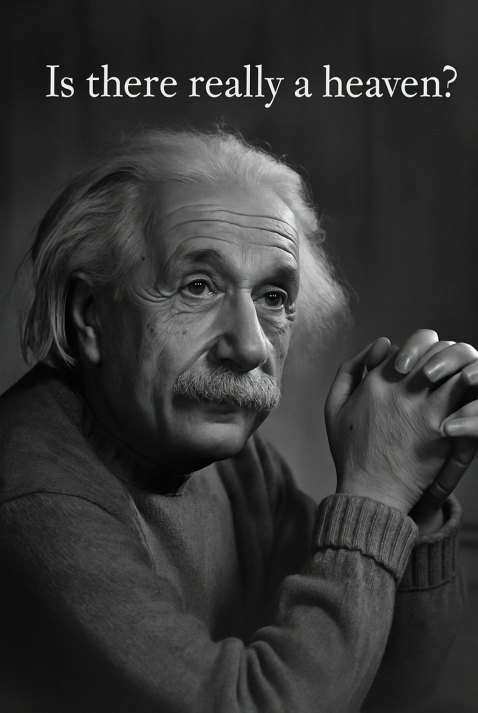
Life
is forever
Albert Einstein never literally said “Life is forever.”
Albert did express ideas that sound very close to that sentiment,
just framed through:
Physics, Time, and Consciousness rather than religion or an
afterlife.
What Einstein
actually
said:
"One
of Einstein’s most cited and authentic reflections comes from a
1939 condolence letter
he wrote after the death of his close friend
Michele Besso:
“Now
he has departed from this strange world a little ahead of me. That
signifies nothing.
For us believing physicists, the distinction between past, present,
and future is only a stubbornly persistent illusion.”
Comments
"Einstein’s
words lead me to question whether death truly ends life."
"Whether it
only marks the point where our understanding of time and memory can
no longer follow."
"As I reflect
on the research of Einstein’s belief that past, present, and future
coexist."
"I am drawn
to the possibility that life and memory may endure in many ways
which we can not explain explain."
Conclusion &
Personal Reflections Is There Really a Heaven?
Blended Reflection: Near-Death Experiences and Continuity
Accounts of Near-Death
Experiences appear across cultures, religions, and generations.
While interpretations differ, certain elements recur with remarkable
consistency: a sense of peace, heightened awareness, vivid memory,
and a feeling of continuity rather than extinction.
What strikes me most is
not whether these experiences prove heaven in a traditional sense,
but what they reveal about consciousness itself.
Many who return from
the brink of death describe time as altered or irrelevant. Moments
seem expansive. Memory feels intensified. Identity remains intact,
even when the body fails. These reports echo a profound idea found
not in theology, but in modern physics.
Albert Einstein once
suggested that the distinction between past, present, and future is
only a persistent illusion. If that is so, then consciousness—like
time—may not simply end. It may transition beyond our limited
perception.
Near-Death Experiences
do not give us a map of heaven. But they do suggest continuity. And
continuity, at its core, is the heart of the question we have been
asking all along.
Final Reflection: After exploring ancient beliefs, philosophical
arguments, scientific perspectives, and personal accounts, I have
come to accept a quieter, more spacious understanding of heaven.
I no longer imagine it
as a distant place, waiting somewhere beyond the stars. Instead, I
see it as continuity. If time is not linear…If consciousness is more
than chemistry…If memory and meaning do not vanish, but endure…Then
perhaps heaven is not where we go, but what we remain part of.
Albert Einstein did not
believe in heaven as a promised reward. Yet he believed deeply in
wonder, humility, and our participation in something timeless. His
view suggests that nothing truly disappears—that our lives are woven
into the universe itself. That idea brings me peace. Not because it
answers every question, but because it honors both reason and
mystery.
There is a past. There
is a present. And because there is meaning, I believe there must
also be a future. That is what I have chosen to believe.
Einstein Reflection: “For us believing physicists, the distinction
between past, present, and future is only a stubbornly persistent
illusion.” Albert Einstein
If nothing truly
disappears, perhaps heaven is not a destination after life, but our
enduring place within it.
Thus,
Heaven remains a mystery.
Human beings continue to search for meaning, comfort, and hope in
the face of mortality.
Did You Decide?
It
is ok if you did not, read on, It could take an eternity.
1.Conclusion & Personal
Reflections Is There Really a Heaven?
Blended Reflection:
Near-Death Experiences and Continuity
Accounts of Near-Death
Experiences appear across cultures, religions, and generations.
While interpretations differ, certain elements recur with remarkable
consistency: a sense of peace, heightened awareness, vivid memory,
and a feeling of continuity rather than extinction.
What strikes me most is
not whether these experiences prove heaven in a traditional sense,
but what they reveal about consciousness itself.
Many who return from
the brink of death describe time as altered or irrelevant. Moments
seem expansive. Memory feels intensified. Identity remains intact,
even when the body fails. These reports echo a profound idea found
not in theology, but in modern physics.
Albert Einstein once
suggested that the distinction between past, present, and future is
only a persistent illusion. If that is so, then consciousness—like
time—may not simply end. It may transition beyond our limited
perception.
Near-Death Experiences
do not give us a map of heaven. But they do suggest continuity. And
continuity, at its core, is the heart of the question we have been
asking all along.
Final Reflection
After exploring ancient
beliefs, philosophical arguments, scientific perspectives, and
personal accounts, I have come to accept a quieter, more spacious
understanding of heaven. I no longer imagine it as a distant place,
waiting somewhere beyond the stars. Instead, I see it as continuity.
If time is not linear…
If consciousness is more than chemistry… If memory and meaning do
not vanish, but endure…then perhaps heaven is not where we go, but
what we remain part of.
Albert Einstein did not
believe in heaven as a promised reward. Yet he believed deeply in
wonder, humility, and our participation in something timeless. His
view suggests that nothing truly disappears—that our lives are woven
into the universe itself. That idea brings me peace.
Not because it answers
every question, but because it honours both reason and mystery.
There is a past. There is a present. And because there is meaning, I
believe there must also be a future. That is what I have chosen to
believe.
Einstein Reflection “For us believing physicists, the distinction
between past, present, and future is only a stubbornly persistent
illusion.” Albert Einstein
If nothing truly
disappears, perhaps heaven is not a destination after life, but our
enduring place within it.
Conclusion & Glossary
Below
is a synthesis of everything explored, bringing together philosophy,
science, personal experience.
This should help you form your own informed understanding.
Afterlife:
The belief that existence continues after physical
death. Cultures differ: heaven, reincarnation, spiritual realms, or
nothingness.
The belief that the
wicked will ultimately cease to exist rather than suffer eternally.
Resurrection:
Belief that the dead will be raised with transformed
bodies. Central to Christianity.
Living forever; in
Christian belief, living eternally in the presence of God.
State or place of
separation from God; interpreted differently across traditions.
Belief that the soul
survives death eternally.
Evaluation of a
soul’s life; often associated with divine justice.
Traditional Catholic
idea referring to the temporary state of souls not condemned nor
admitted to heaven.
In Hinduism,
liberation from the cycle of reincarnation.
In Buddhism, a state
of enlightenment and release from suffering.
IANDS:
https://iands.org/ A Catholic belief in a temporary state of
purification before heaven.
The belief that the
soul is reborn into another body. Common in Hinduism and Buddhism.
Being raised from
the dead; most associated with Jesus Christ.
Deliverance from sin
and the gift of eternal life.
The spiritual
essence of a person.
In Eastern
Christianity, the process of becoming united with God.
The belief that all
souls will ultimately be reconciled to God.
References
A
list of credible sources: academic, scientific, historical, and
religious, supporting the content throughout the book.
Below are,
church-friendly references with short explanations and helpful links
for you who wish to explore:
The subject of heaven,
The afterlife,
and The near-death experiences.
Primary Sacred Texts
-
The Bible, New
Testament – Central Christian teachings on heaven, eternal life,
and resurrection.
-
Online Bible:
https://www.biblegateway.com/
-
The Qur’an –
Islamic teachings about Jannah (Heaven) and the Day of Judgment.
Online Qur’an:
https://quran.com
-
The Talmud –
Rabbinic discussions, including early Jewish concepts of the
afterlife.
Plato
– The Republic – Foundational ideas on the immortal soul and
the pursuit of ultimate truth.
St. Augustine
– The Immortality of the Soul – Reflections on eternal life and the
nature of the soul.
Text:
https://www.newadvent.org/fathers/1302.htmAl-Ghazali – On the
Remembrance of Death and the Afterlife – Classic Islamic meditation
on death and eternity.
John Hick
– Death and Eternal Life – A broad study comparing afterlife beliefs
across religions. [ Need Source ]
Scientific &
Naturalistic Views
Daniel C. Dennett
– Consciousness Explained – A scientific look at consciousness and
why some doubt an afterlife. Overview:
https://en.wikipedia.org/wiki/Consciousness_Explained
Michael Martin &
Keith Augustine
– The Myth of an Afterlife – Essays questioning
the survival of consciousness after death. Website:
https://www.keithaugustine.com
Near-Death
Experience Research
Raymond Moody
– Life After Life – The book that introduced NDEs to modern readers.
Recommended Reading & Viewing
An
exploration of books, articles, websites, and documentaries that
explore,
Heaven, The Afterlife, Near-Death Experiences,
Plus
a little intersection of faith and science.
Books
of Faith-Based, Historical & Scientific
Randy Alcorn –
Heaven
https://www.tyndale.com/p/heaven/9780842379427
-
Summary: A
comprehensive Christian exploration of heaven, offering biblical
explanations, answers to common questions, and a hopeful picture
of eternal life.
Billy Graham –
Nearing Home
https://billygraham.org/
-
Summary: Graham
reflects on aging, mortality, and preparing spiritually for
eternity. Warm, comforting, and written with deep pastoral
compassion.
John Burke – Imagine
Heaven
https://www.imagineheaven.net/
Lee Strobel – The
Case for Heaven
https://www.zondervan.com/p/the-case-for-heaven/
Colleen McDannell &
Bernhard Lang – Heaven: A History
https://yalebooks.yale.edu/book/9780300091076/heaven/
Eben Alexander –
Proof of Heaven
https://ebenalexander.com/books/proof-of-heaven/
Albrecht Dihle –
Heaven and Hell: A History of the Afterlife
-
Summary: A
scholarly look at how ancient cultures viewed death, heaven, and
the underworld, helping readers see how modern ideas developed.
Raymond Moody – Life
After Life
https://www.lifeafterlife.com/
P.M.H. Atwater –
Near-Death Experiences: The Rest of the Story
https://pmhatwater.com/
Stanford
Encyclopaedia of Philosophy – Afterlife
https://plato.stanford.edu/entries/afterlife/
IANDS –
International Association for Near-Death Studies
https://iands.org/ The world’s leading organization for
NDE research, testimonies, and education.
NDERF – Near Death
Experience Research Foundation
https://www.nderf.org/
The Guardian – “The
New Science of Death” (2024)
https://www.theguardian.com/society/2024/apr/02/new-science-of-death-brain-activity-consciousness-near-death-experience
-
Bernard Edwin Anthony Beleskey, he is know as Bernie
-
He
is a Christian writer
exploring life, death, faith, science, and the great questions
of human existence.
-
A
Canadian since 1941, Born in Barrie Ontario.
-
His
Paternal ancestors
migrated from Lithuania, Poland through Germany into Canada
-
His
Maternal ancestors came from Great Britain.
About the Author
The author of
"Is There Really A Heaven?"
is a seeker who refuses to see science and spirituality as rivals, with a deep fascination for the
"Instruction Manual" of life, the DNA and cellular biology that make us who we
are. The author explores the profound
intersection where physical evidence meets eternal hope. Driven by a desire to provide a
logical, comforting, and awe inspiring look at the afterlife, the author invites
readers to look past the surface of daily life and into the "coded" purpose of
our existence. By focusing on the preservation of memory and the transcendence
of the mind, the author provides a fresh perspective for the sceptic and the
believer alike.
The author lives and writes with the
firm conviction that we are more than the sum of our biological parts, we are
travelers on a journey toward a magnificent destination.
Copyright © 2026 by Bernard
Edwin Anthony Beleskey
First edition - 2026 All
Rights reserved
|